
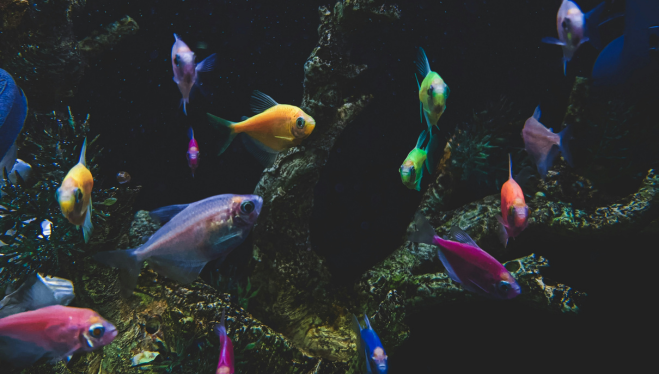
When winter arrives, the entire aquarium ecosystem has to contend with two significant changes: the water tends to cool down and the drastic reduction in natural light hours. If not managed correctly, these factors can put stress on fish, plants, and even filter bacteria.
In this article, we'll look at how to best tackle the cold period, maintaining stable temperature and lighting through conscious management and small practical measures.
Why Winter Challenges an Aquarium
As temperatures drop, the aquarium water also tends to cool, often at night or in poorly heated homes. This can cause:
-
sudden temperature fluctuations
-
slowing of fish metabolism
-
weakening of plants
-
algae proliferation due to light/nutrient imbalance
-
increase in stress-related diseases (such as white spot disease)
In essence, winter disrupts the balance. It's up to us to restore it.
Temperature: How to Keep It Stable in Cold Months
Thermal stability is crucial. Even a drop of 2–3 degrees can stress tropical fish, plants, and especially the bacterial colony in the filter.
Check the temperature daily
Regular temperature monitoring allows for immediate intervention in case of fluctuations. An environment that oscillates between 24°C and 26°C is ideal for most tropical fish.
A precise heater makes all the difference
During winter, it is essential to have a reliable and consistent heater, capable of counteracting the natural cooling of the room. For example, a device like AQPet Venus Smart maintains a stable temperature even when it's very cold outside. Smart regulation prevents sudden peaks, and uniform heat distribution minimizes colder zones in the tank. The energy advantage is a clear bonus precisely in the months when heating is on for longer.
Choose the aquarium's location carefully
Never near windows, doors, or cold walls: an aquarium placed in a stable area allows the heater to work better and with less energy consumption.
Managing Light in Winter: The Photoperiod Must Be Protected
In winter, days shorten and natural light becomes weak. This affects plant photosynthesis and promotes imbalances that lead to the appearance of algae.
Maintain a consistent photoperiod
8–10 hours of continuous artificial light are ideal. A simple timer can ensure regularity even when it gets dark outside at 5:00 PM.
Choose lighting that truly supports plants
A lamp designed to provide uniform light and an optimized spectrum can make a huge difference in the cold months. Lighting such as AQPet Bright 300, for example, helps maintain active photosynthesis in plants even during periods when natural light is insufficient. Stable light output allows plants to grow healthily and fish to retain vibrant colors, while minimizing the risk of shaded areas that encourage algae.
Other Practical Tips for Winter
-
Perform regular water changes every 10–14 days
-
Avoid overfeeding, as fish consume less energy in the cold
-
Clean the filter without using cold water
-
Check water parameters more often
Conclusion
Winter doesn't have to be a problematic period: just adjust the temperature and light to maintain a stable and healthy aquarium. Careful management, combined with reliable tools such as a precise heater and optimized lighting, allows you to get through the cold season without stress for you and your fish.
With devices like AQPet Venus Smart, which maintains a constant temperature, and AQPet Bright 300, which compensates for reduced winter lighting, you can manage your aquarium with peace of mind even in the most critical months.