
Creating a reef aquarium means bringing an authentic fragment of a coral reef directly into your home. It's not just about colorful fish or spectacular corals: the true protagonists, often silent but fundamental to the ecosystem's balance, are marine invertebrates. In this article, we will discover which are the best marine invertebrates for a reef aquarium, how to introduce them, and what benefits they bring to your domestic mini-ocean.
Why choose marine invertebrates for your reef?
Marine invertebrates are the perfect allies for a healthy and balanced reef aquarium. They recreate natural dynamics that make the environment more stable and promote coral growth and fish health.
- They keep the substrate and live rocks clean.
- They control the proliferation of unwanted algae.
- They promote nutrient recycling.
- They add biodiversity, color, and movement to the aquarium.
The best marine invertebrates for your reef aquarium
1. Hermit Crabs
These friendly crustaceans are perfect scavengers! They feed on organic debris, algae, and leftover food. They need empty reserve shells to grow.
- Ease of care: High
- Ideal environment: Reef with rocky microhabitats
2. Turbo Snails
Snails are fundamental in the fight against algae. They consume large amounts of green algae and diatoms. They are ideal for live rocks and aquarium glass.
- Ease of care: High
- They help keep the glass always clean.
3. Starfish (Fromia, Linckia)
Elegant and scenic, but pay attention to their needs. Some species help remove debris from the bottom. They require stable and well-established aquariums.
- Ease of care: Medium
- Ideal for already established aquariums with stable water.
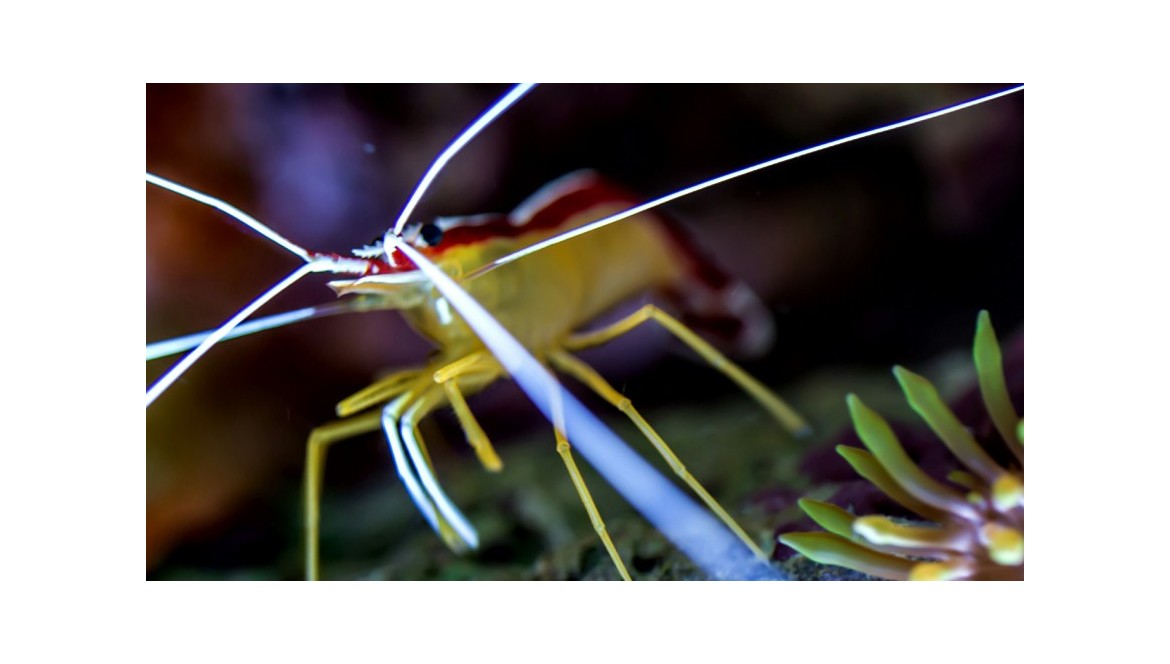
4. Cleaner Shrimps (Lysmata amboinensis)
The doctors of the reef! They clean fish of parasites and dead skin. They live well in pairs and are very active.
- Ease of care: High
- They add movement and interaction to the reef.
5. Sea Urchins (Tripneustes, Mespilia globulus)
Excellent natural scavengers. They feed on filamentous algae and debris. They have peaceful behavior, but be careful with the decorations!
- Ease of care: Medium
- Perfect for keeping hard-to-reach spaces clean.
6. Anemones (Entacmaea quadricolor)
The kings of movement and natural aesthetics. They host clownfish and recreate unique symbiosis. They require intense light and good water quality.
- Care difficulty: Medium/High
- Ideal for aquarists with some experience.
How to introduce invertebrates into your reef aquarium
- Slow and careful acclimatization: use the drip method to avoid shock from parameter changes.
- Water parameter control: nitrates, phosphates, and calcium must be stable to ensure the well-being of marine invertebrates.
- Avoid overpopulation: each species has its role, but too many invertebrates can create imbalances.
- Supplementary nutrition: some invertebrates need specific foods, such as plankton or organic detritus.