
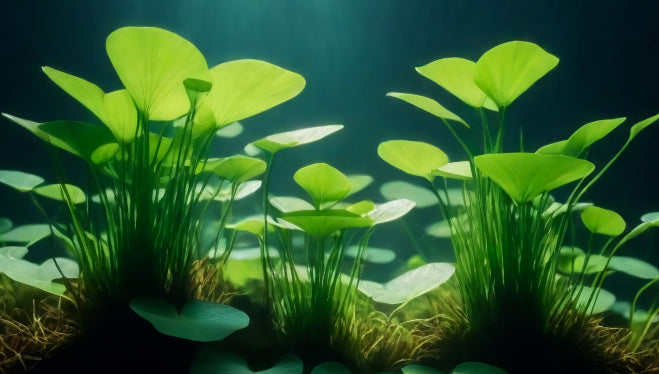
Freshwater aquatic plants are not just an aesthetic touch for your aquarium, but a fundamental element for the biological balance of the environment. In addition to oxygenating the water and providing shelter for fish, they help prevent the growth of unwanted algae.
In this guide, we'll help you choose the most suitable species and explain how to care for freshwater aquatic plants to achieve a healthy and thriving aquarium—whether you're a beginner or an experienced aquarist.
Why include freshwater aquatic plants in your aquarium
-
Naturally oxygenate the water
-
Absorb nitrates and waste substances
-
Offer shelter and refuge to fish
-
Improve the overall aesthetics of the aquarium
-
Limit the proliferation of algae
How to choose aquatic plants for your aquarium
1. Evaluate aquarium conditions
Before purchasing, consider:
-
Available lighting: some plants require a lot of light, others grow even in partial shade.
-
Water temperature: some tropical species require higher temperatures.
-
Substrate and fertilization: some root better in rich substrates, others absorb nutrients directly from the water.
2. Easy plants for beginners
If you're just starting out, we recommend:
-
Anubias – hardy, grows even with low light.
-
Vallisneria – ideal for creating a planted background.
-
Egeria densa – fast-growing, excellent for oxygenation.
3. Plants for more advanced aquariums
For those with experience and a well-balanced system:
-
Hemianthus callitrichoides – perfect for creating a green carpet on the bottom.
-
Alternanthera reineckii – reddish leaves for a touch of color.
-
Rotala rotundifolia – elegant and dynamic.
Freshwater aquatic plants: care and maintenance
Lighting
Provide at least 8-10 hours of light per day, preferably with specific LED aquarium lamps. Too dim light slows down photosynthesis; too much can promote algae.
Fertilizers
Plants need macro and micronutrients. Liquid or tablet fertilizers can be added to the substrate.
Pruning
Regularly remove dead or damaged leaves. This stimulates growth and keeps the aquarium tidy.
CO₂ (optional but recommended)
Adding CO₂ can make a big difference in plant growth, especially for more demanding species.
Common problems and solutions
| Problem | Possible causes | Solutions |
| Yellow or transparent leaves | Nutrient or light deficiency | Add fertilizers, improve lighting |
| Slowed growth | Lack of CO₂ | Consider a CO₂ system |
| Excess algae | Too much light or nutrients | Reduce lighting, change water, introduce fast-growing plants |
Conclusion
Freshwater aquatic plants, with the right care, transform your aquarium into a true natural ecosystem. Choose them according to your needs and dedicate a little time each week to their maintenance. The results will surprise you!